
Occupational risk prevention in the office
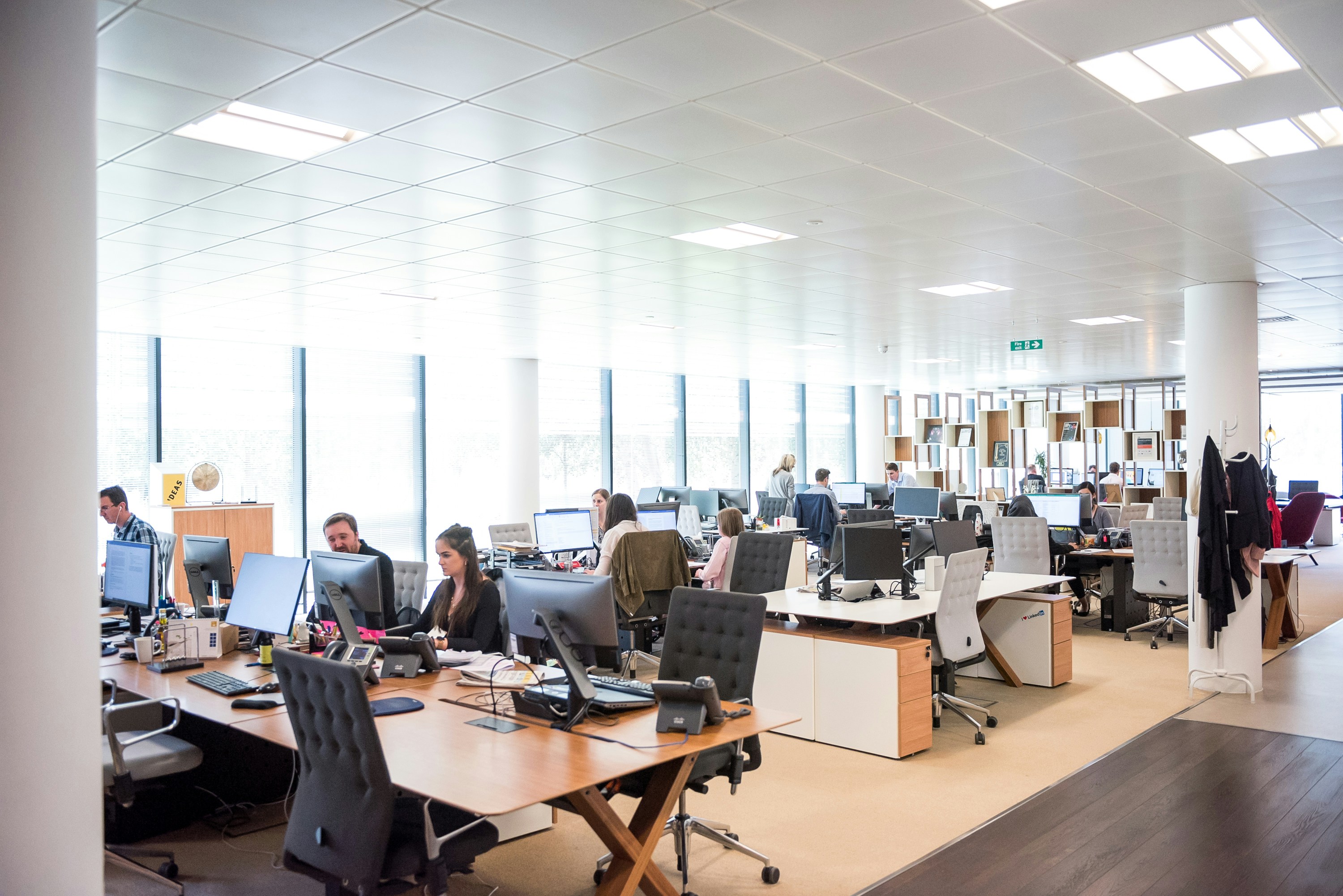
Although offices are generally perceived as safe environments, they present specific risks that must be properly identified, assessed, and controlled.
Offices are often overlooked in the field of occupational risk prevention due to the belief that simply sitting at a desk means one is no longer exposed to any health risks. Nothing could be further from the truth, as in office environments, occupational risk prevention is key to protecting workers’ health and improving their well-being, productivity, and work organization.The health issues we most commonly see in the offices we visit are lower back pain, neck pain, and migraines. Here’s how to prevent them with small adjustments to your workstation:
- To prevent lower back pain, keep your back straight, which means leaning into the backrest when sitting. It's also very healthy to change positions throughout the day (for example, by reclining the chair) and to stand up once in a while.
- Neck pain is usually caused by sitting too far from the desk while using the keyboard, as this puts extra strain on the shoulders. There needs to be enough space in front of the screen so that your arms can rest on the desk, not just your wrists.
- Finally, to prevent migraines caused by eye strain, make sure there are no excessive light contrasts. There should be no direct light sources behind the screen, nor reflections from lamps or windows. To achieve this, adjust the screen’s tilt until the reflections disappear, and then raise or lower it until the surface is perpendicular to your eyes (that is, so that all corners of the screen are at a similar distance from you).
At Ergasia, we help companies and professionals implement preventive measures tailored to the reality of each office. We analyze workstations, assess the ergonomic conditions for each individual, review preventive measures, and propose practical solutions to create safer, healthier, and more efficient workspaces. Effective preventive management helps reduce musculoskeletal discomfort, eye strain, work-related stress, and other issues associated with sedentary work.
Our approach combines regulatory compliance with a people-centered preventive vision. We work to ensure that every office has well-designed workstations, appropriate procedures, specific training, and a preventive culture integrated into daily operations.
Prevention in offices not only avoids risks: it also helps improve comfort, reduce absenteeism, and foster a healthier and more sustainable work environment.
Contact
Send us your details and we will contact you.


